Trust is a communication problem

A field study of a service robot in a campus store found that perceived usefulness and the robot's way of speaking shaped acceptance. That transfers to prompting.
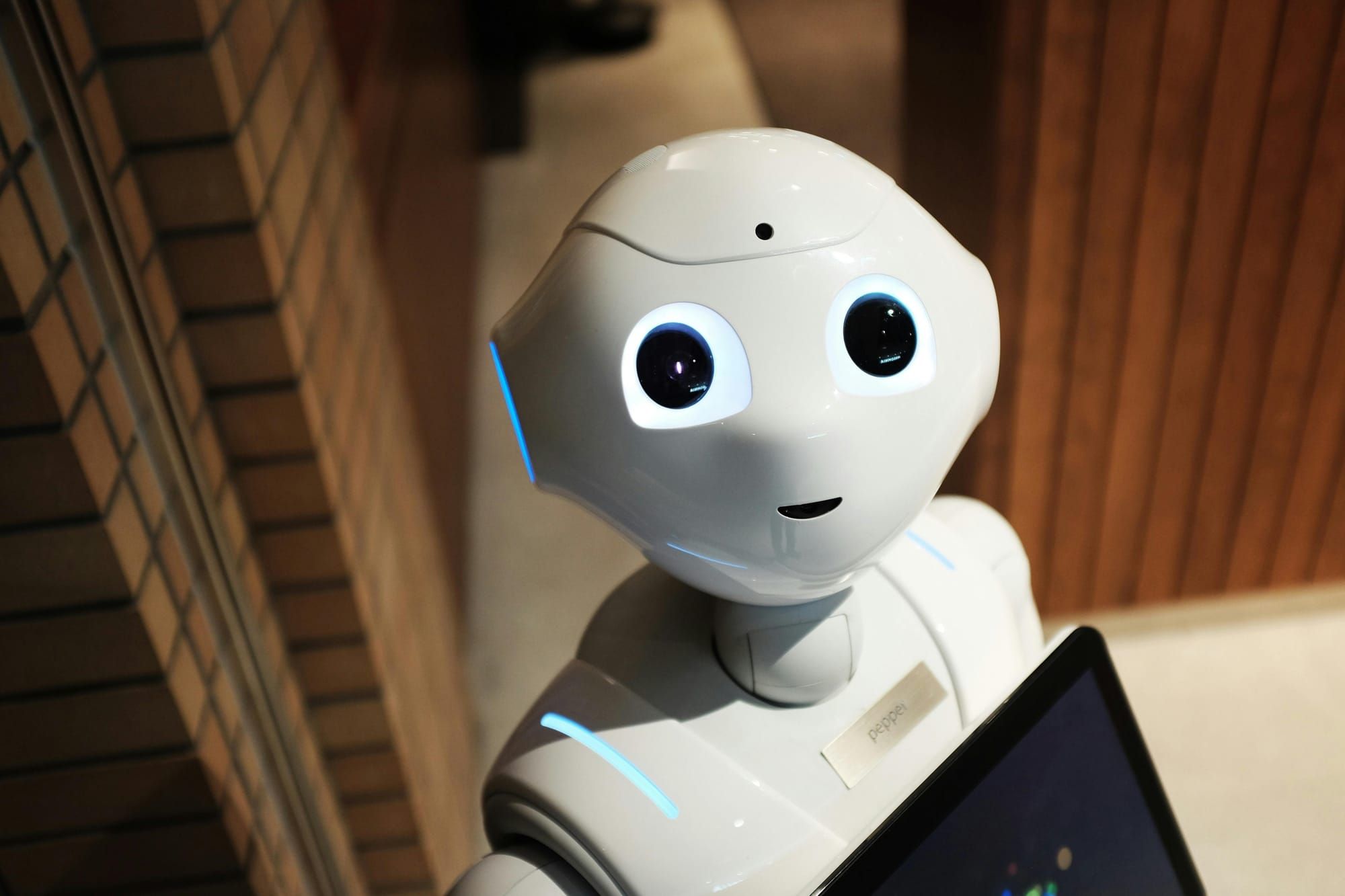
This piece first appeared in German. The English version is a rewrite rather than a line-by-line translation, and the German original stays online in the archive: KI in Retail – Algorithmus trifft auf Empathie.
At the VolShop on the University of Tennessee campus, a humanoid robot called Pepper greeted students and visitors every day. Professor Inhwa Kim studied how customers responded, and the finding pointed away from the technology. Whether a customer warmed to the robot depended on whether it seemed useful, whether it came across as cool or as eerie, and how it spoke.
That result travels much further than retail robotics, which is what makes it worth the attention of anyone who types into a chat window. The mechanisms determining whether a person trusts an AI system are the same whether the system has a body or only a text field.
Kim's doctoral research, "From Adoption to Optimization of AI-Powered Retail Service Robots", analyzed how customers reacted to the machine and what separated acceptance from rejection. In the field experiment at the campus store, perceived usefulness and a sense that the robot was cool improved customers' attitudes, while an eerie impression worked against acceptance. The way the robot talked mattered as well: overly expressive speech lowered how useful people found it, and a moderately expressive style did best.
The principle underneath reaches past the shop floor. Acceptance depends on how a system communicates as much as on what it can do, which holds for a robot in a store and for a chatbot on a screen.
While Pepper stands in a shop, other AI systems have been working in social media for years. Virtual influencers such as Lil Miquela hold real brand contracts, with names like Prada and Calvin Klein, despite not existing.
Kim and her team ran an experimental study on when such figures read as credible and when they produce discomfort. The results, published in the Journal of Business Research in 2024, show a precise relationship. Paired with realistic behavior, virtual influencers with a medium degree of visual realism came across as both cool and eerie, an effect recalling the uncanny valley that the roboticist Masahiro Mori described in 1970. In a second study with AI-generated figures, high visual realism went along with less eeriness.
That has practical relevance well beyond marketing. People evaluate AI systems by how well the behavior matches the appearance. A chatbot presenting itself as an omniscient expert while making obvious errors produces the same breach of trust as a virtual influencer who looks too perfect to believe.
Kim's research turns on a question much broader than retail robotics: under what conditions do people trust an AI, and under what conditions do they stop?
Communication style matters as much as competence. In the Pepper study, the way the robot spoke measurably changed how useful customers found it. For prompting that means clear, context-rich instructions produce better answers and also create the conditions under which the output can be trusted. Vague prompts produce vague answers, and vague answers erode trust.
Expectation management is everything. The uncanny valley research shows that trust breaks where appearance and behavior fail to match. Applied to text assistants: a system answering in a confident register while being factually wrong generates more distrust than one that states its uncertainty openly. Users who understand that can place the output more accurately.
Empathy runs both ways. People accept AI more readily when the system appears empathetic. The reverse holds as well. Where users communicate more clearly, more precisely and with more awareness of context, bringing a kind of communicative empathy of their own, the interaction improves.
Kim has since carried the work into teaching at Oregon State University, where an experiment with her students on prompting produced a set of principles that ThinkBeyondAI has covered separately.
The economic dimension is considerable. Market researcher Custom Market Insights projects the global market for retail robotics at 249.3 billion US dollars by 2033, at a compound annual growth rate of 28.7 percent. Models like Pepper have meanwhile appeared outside retail, in hospitality, health care and education.
Technology alone does not drive that growth. Kim's research suggests the acceptance question, whether people take these systems up or reject them, is finally a question about communication. Companies deploying AI as a pure efficiency instrument miss the decisive point. The ones who understand that trust arrives through communication, and not through technical superiority, will shape the market.
None of that is specific to robots and virtual influencers. It applies to every interface where a person speaks to a machine, from the checkout robot to the prompt window.
Grouped by the section they support.
Opening
Perception and speech decided acceptance
Virtual influencers and the uncanny valley
Three transfers to anyone writing a prompt
The market behind the empathy
Your link has expired. Please request a new one.
Your link has expired. Please request a new one.
Your link has expired. Please request a new one.
Great! You've successfully signed up.
Great! You've successfully signed up.
Welcome back! You've successfully signed in.
Success! You now have access to additional content.