
Collaborators on the project

Shay Luo
Ex-Kearney Partner & Founder. Combines consulting strategy with AI solutions.

Prof. Inhwa Kim
Assistant Professor of Business at Oregon State University. AI scientist in human-AI interaction and AI in retail.
AI Basics
Understand how today's AI models really work, and where they fall short. Learn to use them with judgment instead of blind trust. Learn from industry experts and put it into practice in our AI City Quest mini-game. The essential starting point for anyone new to working professionally with AI.
[
[
AI Skills
Go from user to builder, step by step. Learn the practical skills that set you apart: coding with AI, using tools through MCPs, and designing workflows that automate real tasks. Build from your first prompt to complete AI systems in professional work environments.
[
[

THINKBEYONDAI
The best professionals of the next decade won't ignore AI, and they won't trust it blindly either. They will be the ones who define what counts as correct in their field, not in spite of automation but through it.
ThinkBeyondAI exists to support exactly that: understanding how these systems work and recognizing where they fail, so that you remain the standard AI is measured against rather than the one it overtakes.
We study how AI is reshaping professional work and what it means for institutions whose authority rests on human judgment. And we go beyond theory: we show how the tools are used in everyday practice and create learning materials for teams and individuals.
Our work grows out of an international collaboration between students, professors and practitioners. Students bring the questions their future professions have stopped asking. Professors bring methodological rigor. Practitioners bring the reality of everyday work.
Think beyond the forecast.
Featured posts
A Bain partner on where AI has already changed consulting work, which roles it creates, and what he now expects from applicants.
by Carl Erhard, Sep 18, 2026
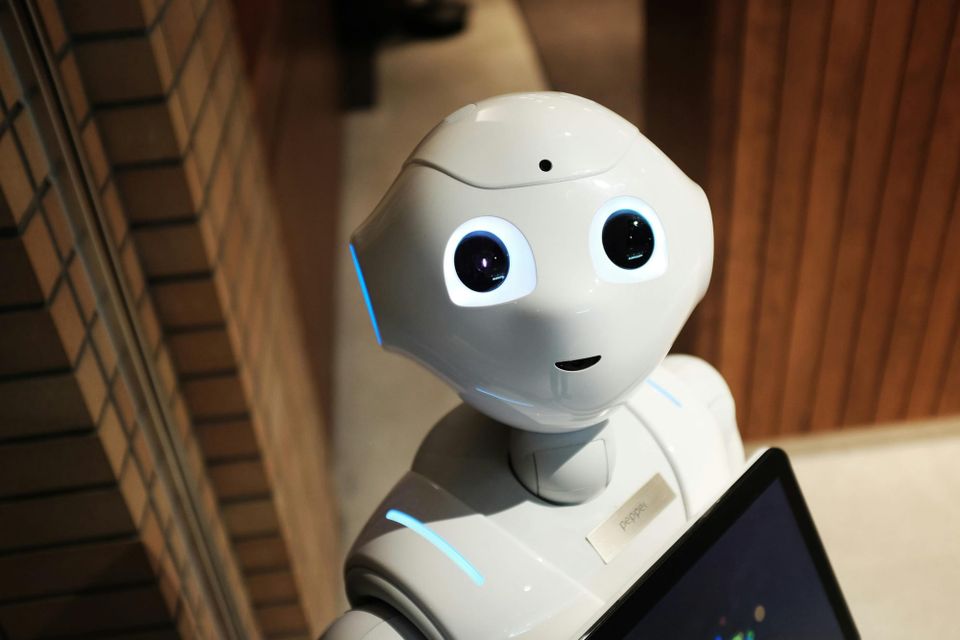
A field study of a service robot in a campus store found that perceived usefulness and the robot's way of speaking shaped acceptance. That transfers to prompting.
by Carl Erhard, Sep 18, 2026

Bain's consultants have built more than 19,000 custom GPTs, and in the UK the firm says it will hire 25 percent more graduates, not fewer.
by Carl Erhard, Sep 18, 2026

Push a model past a perfect fit on its training data and test error starts falling again. Double descent, and what it did to learning theory.
by Tom Buchholz, Sep 16, 2026

A language model puts a probability on every possible next word, picks one, and runs the calculation again. Everything else follows from that loop.
by Emil Ohligs, Sep 16, 2026

A KKR managing director on where AI lands in a private equity firm, what the deal market looks like, and how to get noticed when applying.
by Emil Ohligs, Sep 16, 2026
Latest posts
(81 Posts)

A practical CTO guide to audit logs, model changes, content provenance and meaningful oversight under emerging AI rules.
by Matteo Zanetti, Oct 24, 2026

How do you forecast a month that has not happened yet? An introduction to time series, built on a simple regression you can run yourself, and an honest look at where it fails.
by Emil Ohligs, Oct 16, 2026

Picture yourself uploading a 50-page annual report, with two columns of text and a stack of financial tables, to a chatbot and asking one question: what was last year's revenue? In the bad case, the model makes up a number or insists the document never says. The
by Tom Buchholz, Oct 12, 2026
A Bain partner on where AI has already changed consulting work, which roles it creates, and what he now expects from applicants.
by Carl Erhard, Sep 18, 2026

A company with years of consistent service records can forecast failures; one without cannot. Curated reality is the scarce asset now.
by Sven von Bismarck, Sep 18, 2026

New York Fed data shows firms adopting AI and rarely cutting staff. What they report instead is retraining and redistributed tasks.
by Sven von Bismarck, Sep 18, 2026